Project Finance Model Review
Using AI for review is not about inventing a new way of doing it; it’s about automation. So we first need to lay out the steps a financial modeler follows and see how we can delegate them to AI for the best output.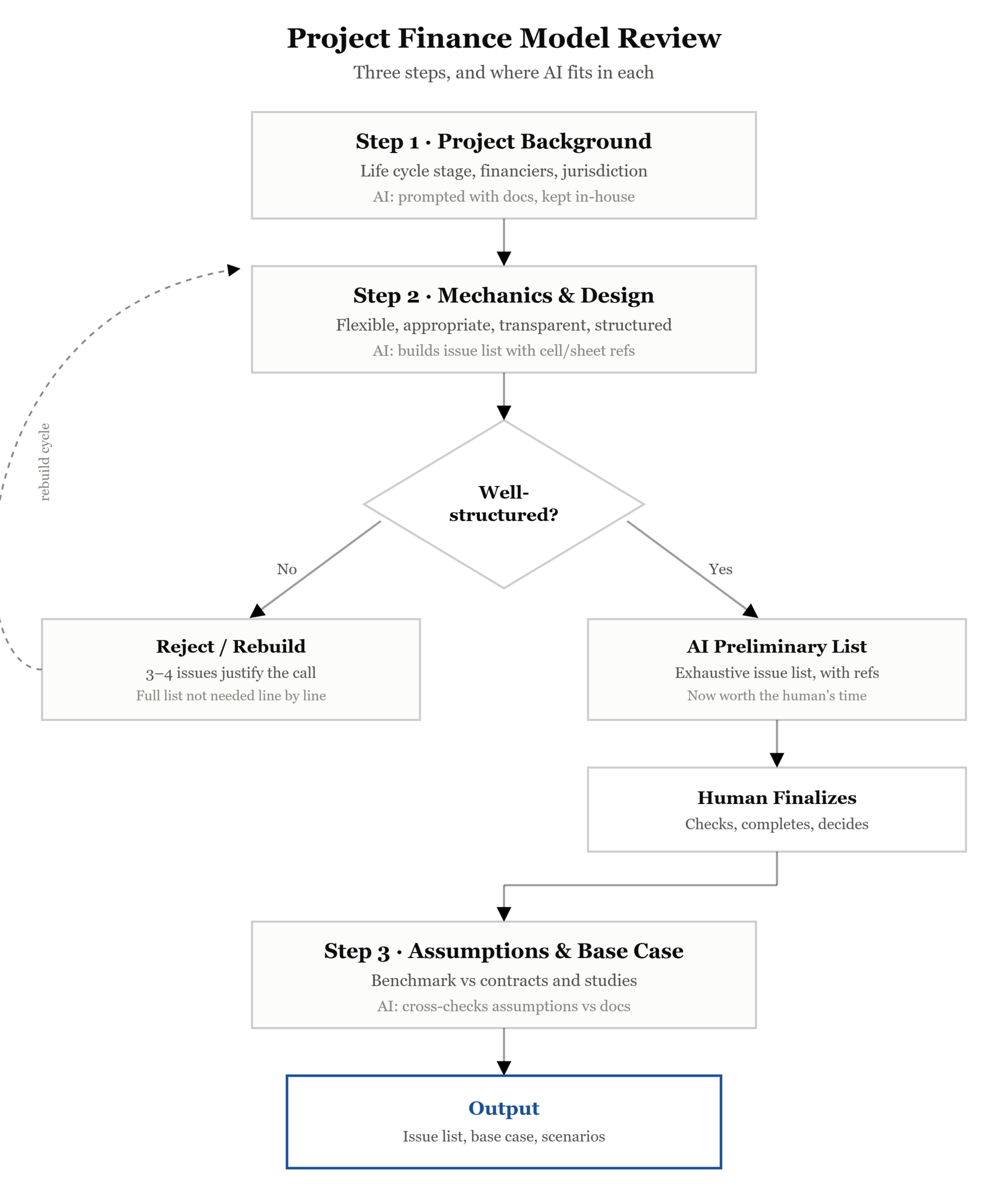
Step 1: Project Background
The first step in the review is to get familiar with the context of the project. Without this step, even a mechanical review of the model cannot be done. You need to know, at minimum, what stage of the life cycle the project is in, who the potential financiers are, where they are with the project contracts, and the specific tax and accounting treatment in the jurisdiction where the project is situated.
Step 2: Model Mechanics and Design
Review the model’s mechanics and design, and decide whether to keep the model or rebuild it from scratch.
There are plenty of Excel add-ins and tools that can already assist in reviewing a model’s mechanics. The human modeler will still have to understand the model’s structure, design, and mechanics, and make sure the model is flexible, accurate, transparent, and structured.
The end result of the analysis is a list of issues in the model, with references to the cell and sheet in the model and a clear explanation of each issue. Some issues are not problems or errors to be solved, but rather a matter of understanding the logic behind the choice of model design and mechanics; if a better way of doing something is possible, suggest improvements.
Step 3: Assumptions and Base Case
Review the model’s assumptions, benchmark them, and make sure the financial model reflects the contracts and the various studies done on the project. In short, define or redefine the base case and define other scenarios to be studied.
Can These Tasks Be Delegated to AI?
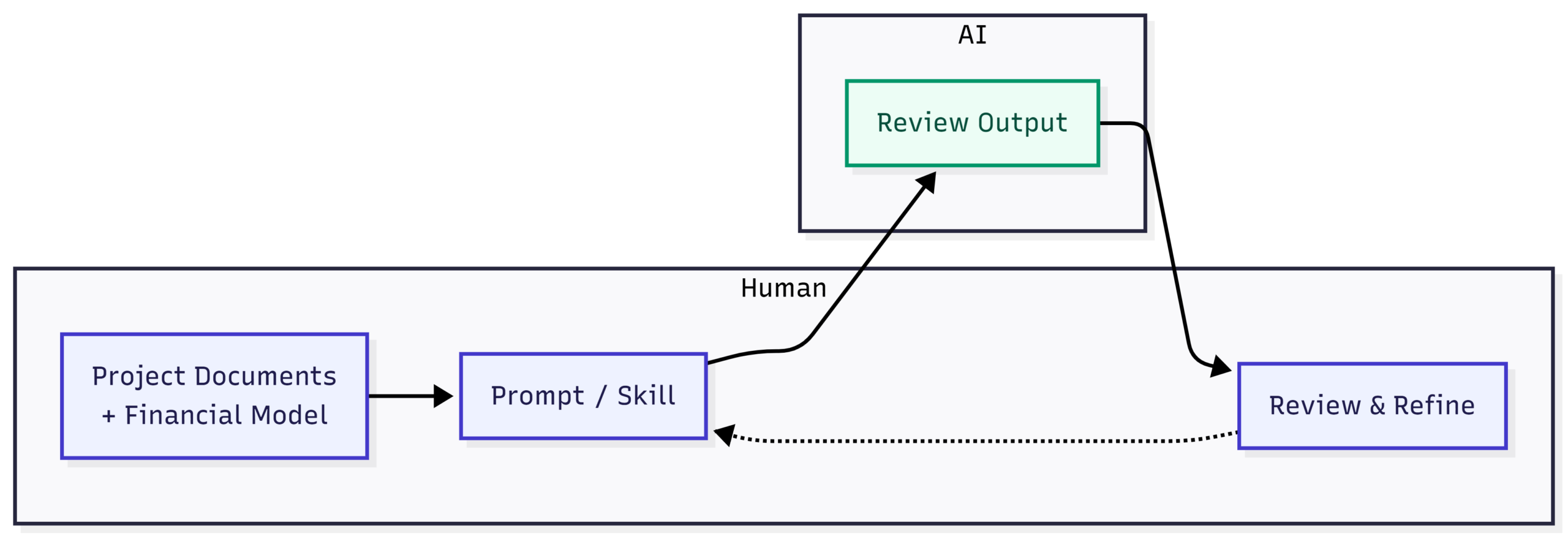
AI in Step 1: How do you give AI the context of the project? The obvious answer is you tell it, meaning you prompt it. You need to give it access to the project folder; if there is anything specific that is not mentioned in any documents, it needs to be prompted in the chat. This is also where data privacy comes in: project documents should never leave your firm’s environment meaning using an enterprise agreement with the AI company that contractually excludes your data from being used for training and having a clear firm policy on which categories of documents can be used with AI at all.
AI in Step 2: The Prompt:
For that, you can create a Skill (Claude’s term for a packaged, reusable prompt/checklist) specifically for the Project Finance Review. In it, specify the list of things you want the AI to check and report, and provide directions on how you want the output organized. This Skill is saved once and can be called anytime you need to review a project finance model, rather than being rewritten from scratch each time.
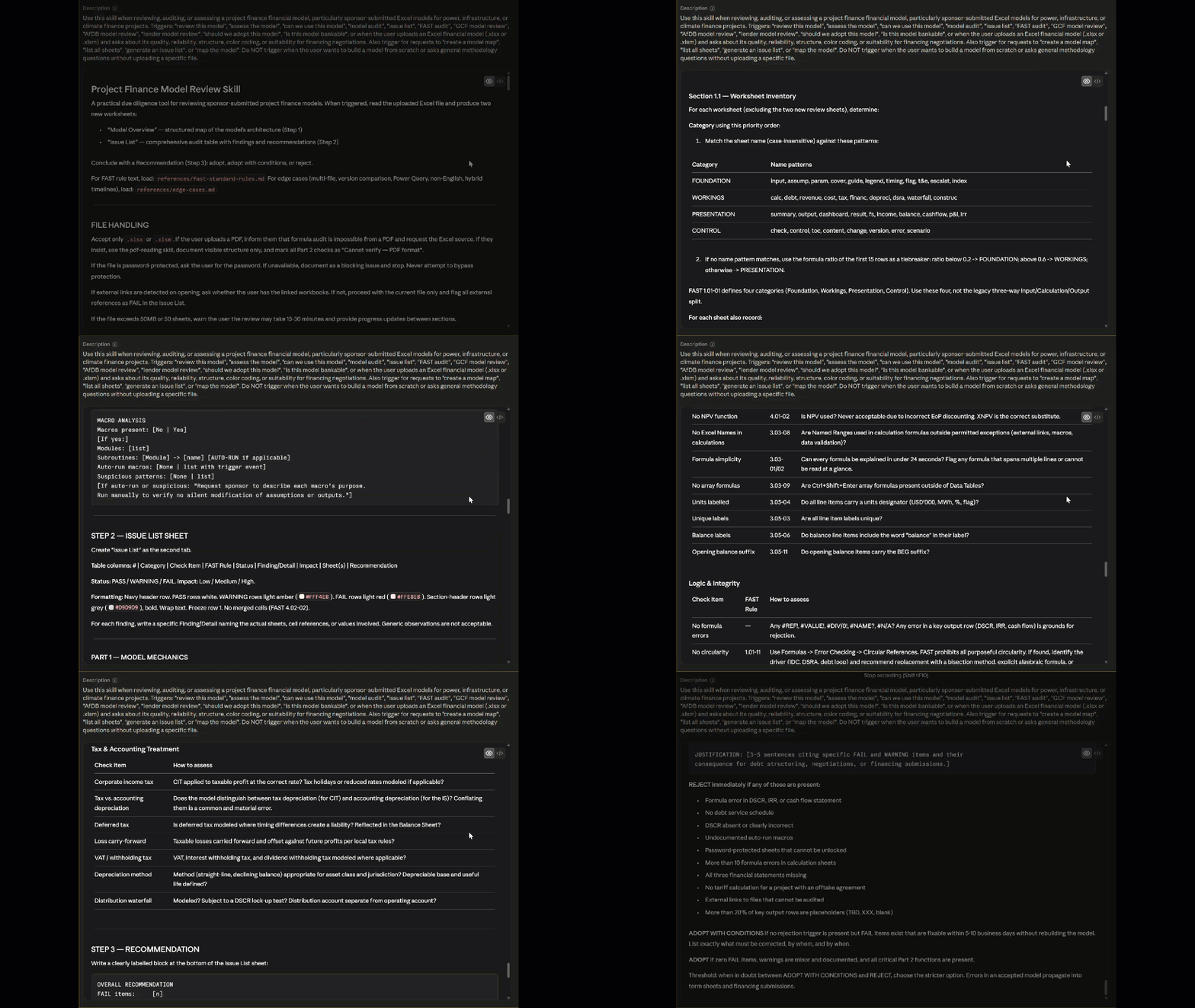
Now, I do not think it is a good idea to copy someone else’s skill and use it in your model. You need to have ownership of the Skill so that when you review the work done by AI, you can see which command in the skill has deficiencies and improve the skill as you continue using it for the review. You can start with available checklists, but treat them as a starting point, not the finished product: build your own Skill with AI on top of one. I have a Generic Review checklist for Project Finance models that I use in my case studies for my courses on the review of project finance models, and I can share that with you as a starting point. The checklist is only the raw material; the Skill you build with AI around it, and then keep refining as you use it, is what you actually own.
One thing that should be clearly stated in the Skill is to test the model for speed and runtime. If you are taking your model with you to meetings to run scenarios live, you cannot afford to wait ten minutes for a scenario to run; it’s embarrassing. So you want AI to check the model’s speed and report the running time of each macro.
When Does AI’s Full Issue List Actually Matter?
It is worth thinking about this as a decision tree, where the value of AI’s exhaustive output depends entirely on which branch you land on.
If the model is poorly structured, the decision to reject it is easy to reach. A human modeler will usually know, after opening the file and going through a couple of worksheets, that this model will not do the job. AI can still assemble a long list of issues, but at that point the list is largely wasted effort. Three or four bullet points are enough to justify the decision to rebuild. Since the conclusion is that the model cannot be used, there is no need for anyone to go through the full list of issues line by line. The same logic applies to a model that is workable in principle but so overly complex that it requires a complete restructuring; the decision is effectively made before the detailed list is ever read.
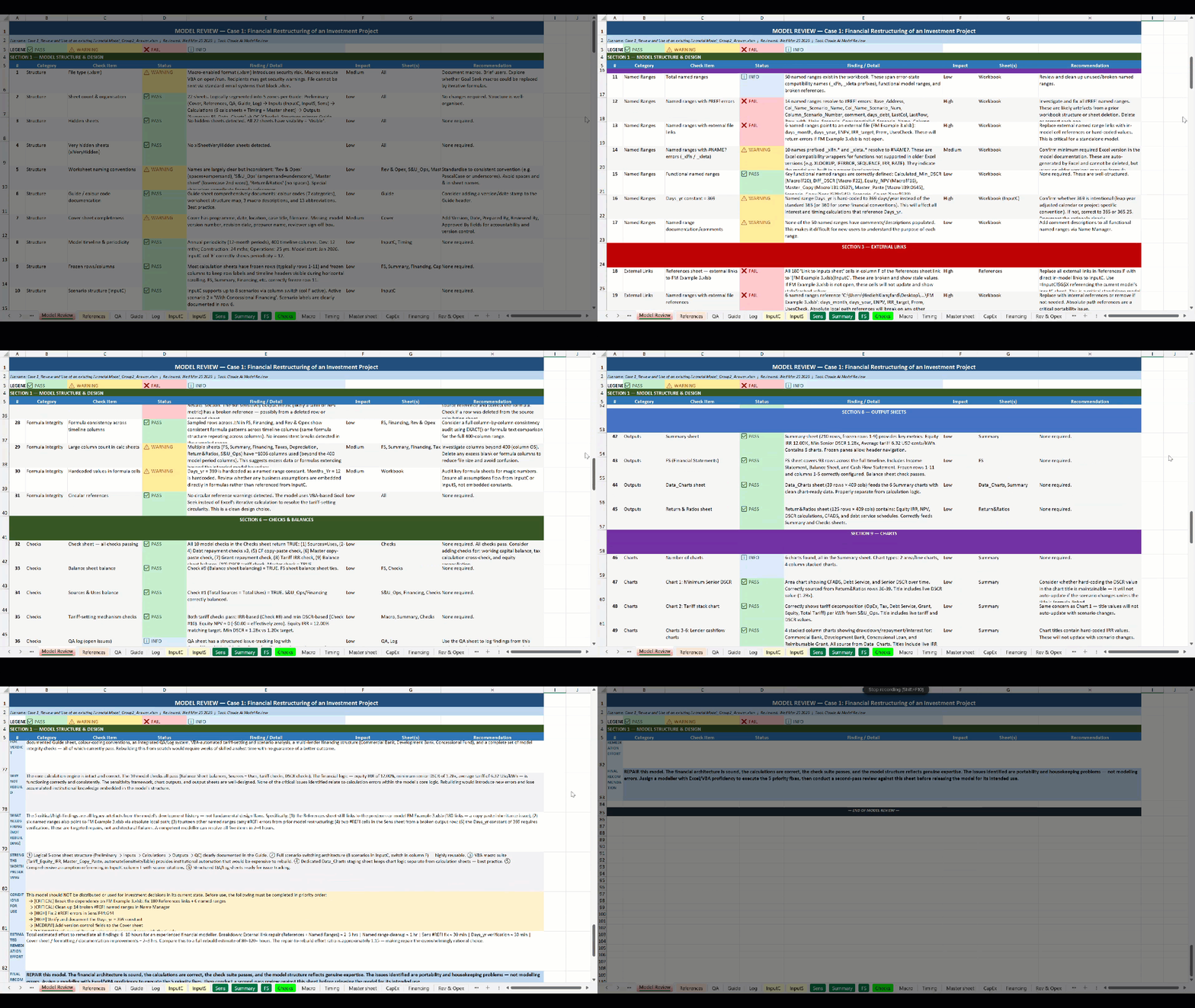
For a model that is well-structured and free of structural issues, AI’s exhaustive output actually pays off. AI can generate a preliminary list of issues covering both the model’s mechanics and its assumptions and calculations, cross-checked against the project agreements and studies. The human modeler then goes over that list, completes it, and makes the final decision, whether on the base case, the scenarios, or the model’s mechanics.
A la Fin
In this process, AI can assist, but as with many decisions, there is also a holistic analysis that matters when it comes to decision-making in the review of project finance models, specifically around the flexibility and structure of the model. More flexibility means more complex structures, so a human modeler knows the issues that come with complex models and how those complexities will be further compounded as the model is used over time. Assessing that a model is good for now but can be easily restructured as time goes by is an understanding that is difficult to define to AI. Perhaps, with enough training on a wide range of examples and cases, this capability could eventually be developed in AI models as well.
It is also worth remembering that if AI is trained on our accumulated modeling practice, it may also inherit whatever we have not been doing correctly ourselves. That is why I insist on directing the AI’s output toward the specific things that matter to you when it comes to review. You need to be clear about the purpose of the model today, how the model is going to be used tomorrow, and whether the model you are reviewing is capable of swiftly doing the things you expect of it: debt sizing, debt sculpting, tariff setting, climate scenario analysis, financial structuring, sizing LDs, and so on.